overview
This recipe is by Hyosun of Korean Bapsang
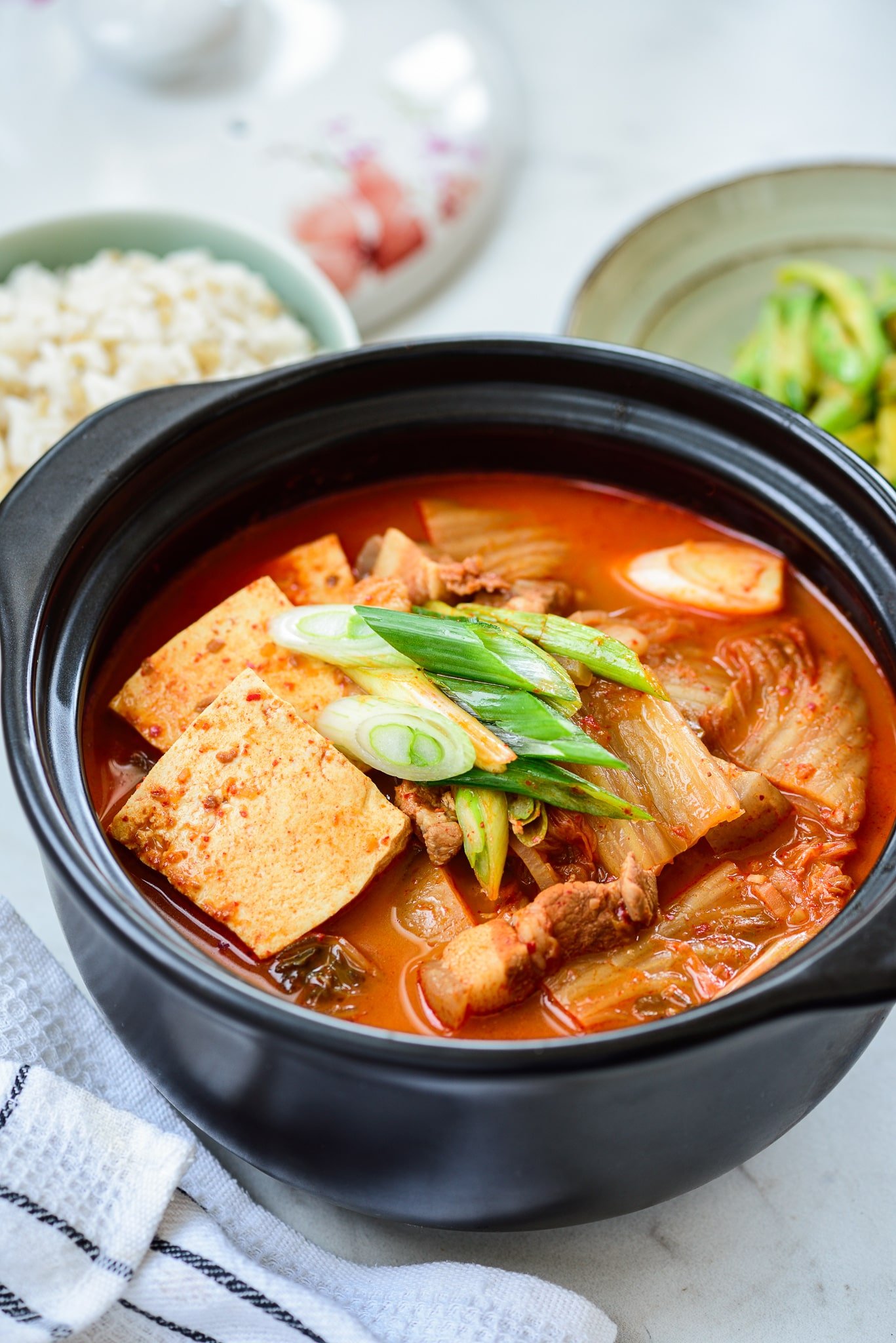
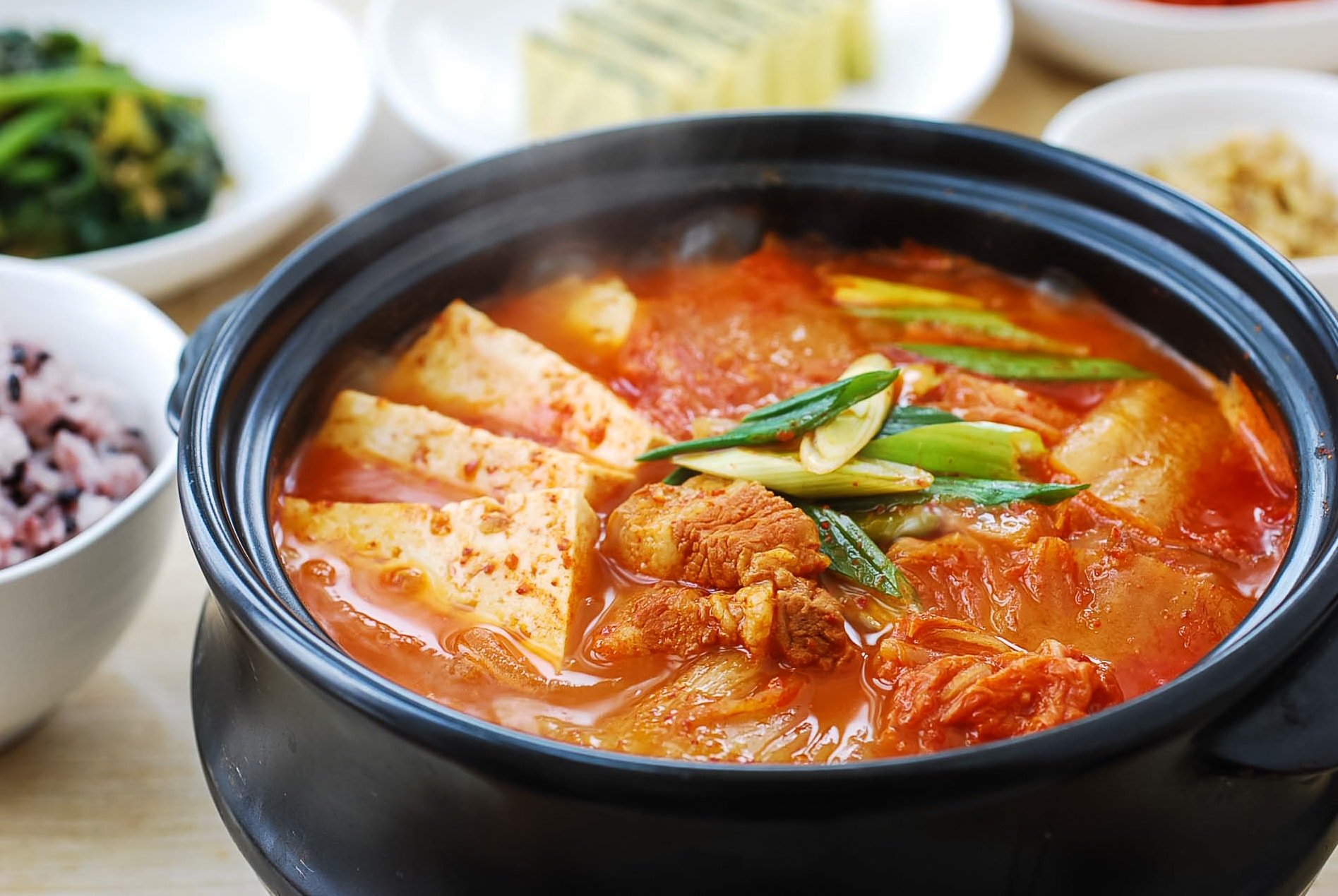
The most common dish made with aged kimchi is kimchi jjigae (김치찌개). It's a go-to stew in Korean homes and my absolute favorite! Whether you make it to use up old kimchi, or to satisfy a craving, this small pot of comfort food is all you need for a satisfying meal.
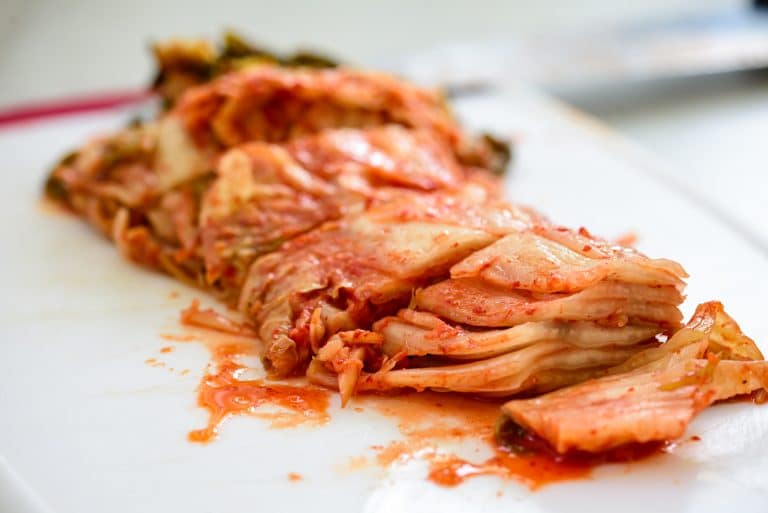
the kimchi
When cooking with kimchi, you should always use fully fermented, sour kimchi. The older the better! If you can’t wait for your kimchi to turn sour, add a little bit of vinegar to the kimchi before using it. It’s not going to be as good as sour kimchi, but it’ll help a little.
Also, your Korean market may carry commercially packaged kimchi called mukeunji (묵은지), meaning old kimchi.
If the kimchi is overly sour to your taste, add a teaspoon or two of sugar to the stew to balance out the sour taste.
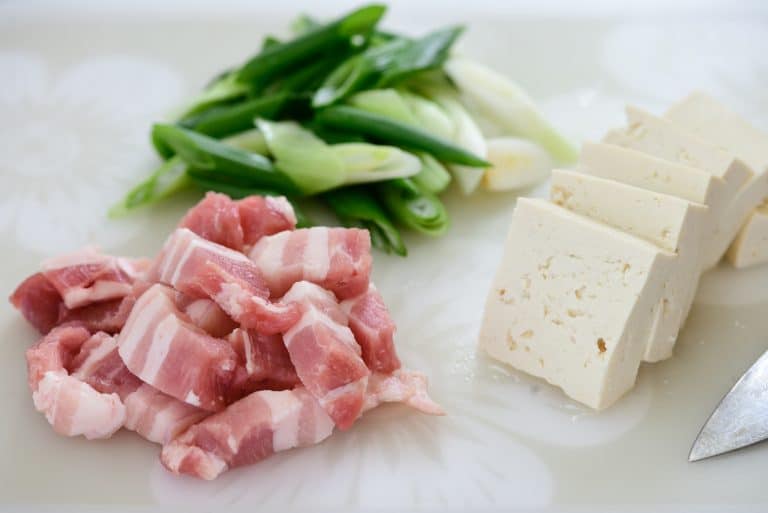
the meat
While there are many variations, the most favored protein for kimchi jjigae in Korea is fatty pork. As I always say, kimchi and fatty pork is a match made in heaven. Pork ribs are also common and delicious in kimchi stew. If you want use pork ribs instead, pre-boil the ribs until fairly tender for 20 to 30 minutes, and then cook with kimchi.
If you don’t like pork, use beef or canned tuna instead. This recipe also includes the canned tuna version.
Growing up, we also enjoyed kimchi jjigae that was simply made with anchovy broth without any meat. It gives a nice, clean taste to the stew.
tips for making good kimchi jjigae
- Use old, sour kimchi.
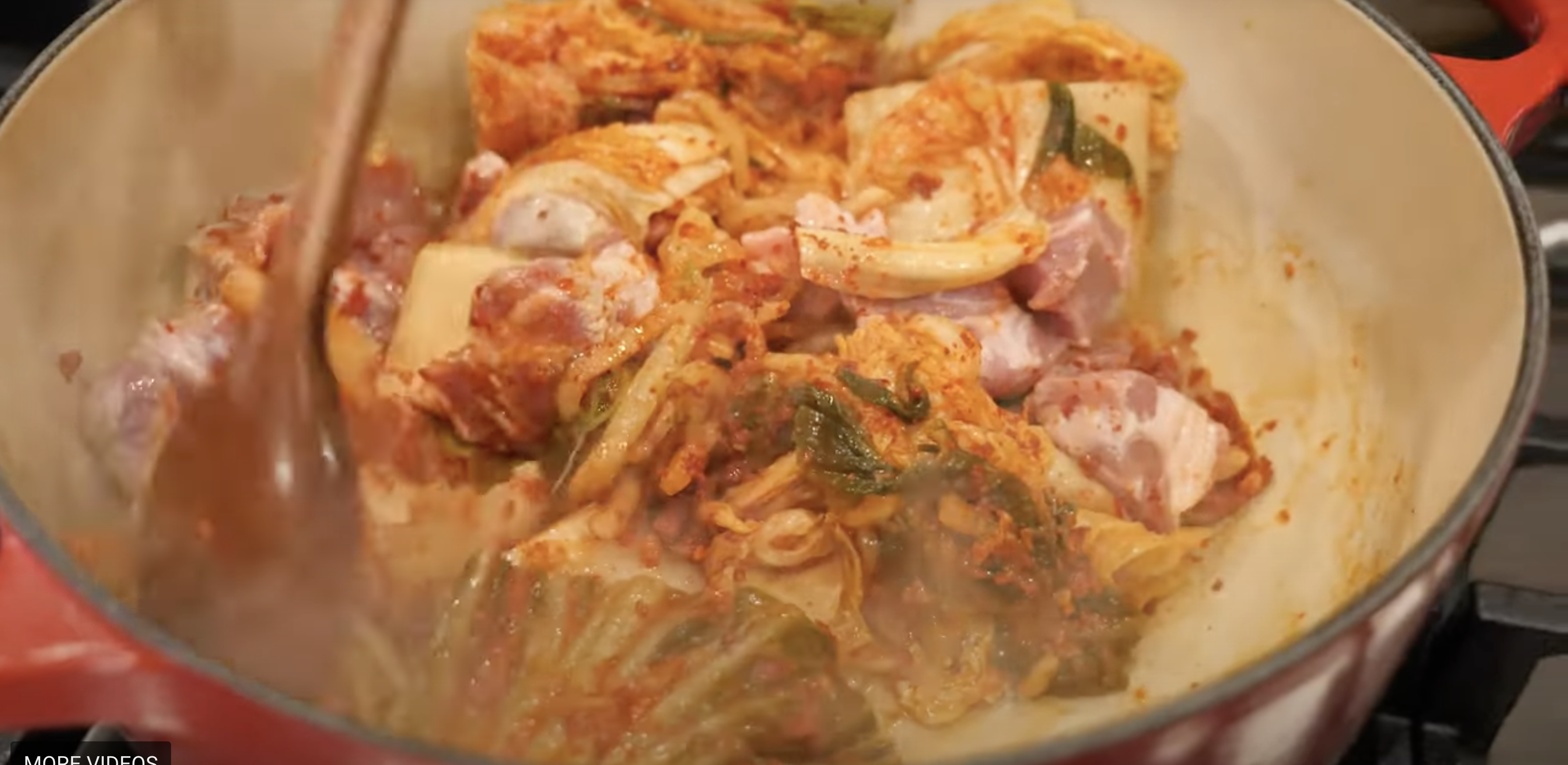
- Cook the kimchi and pork together before adding the liquid. This step develops extra flavor.
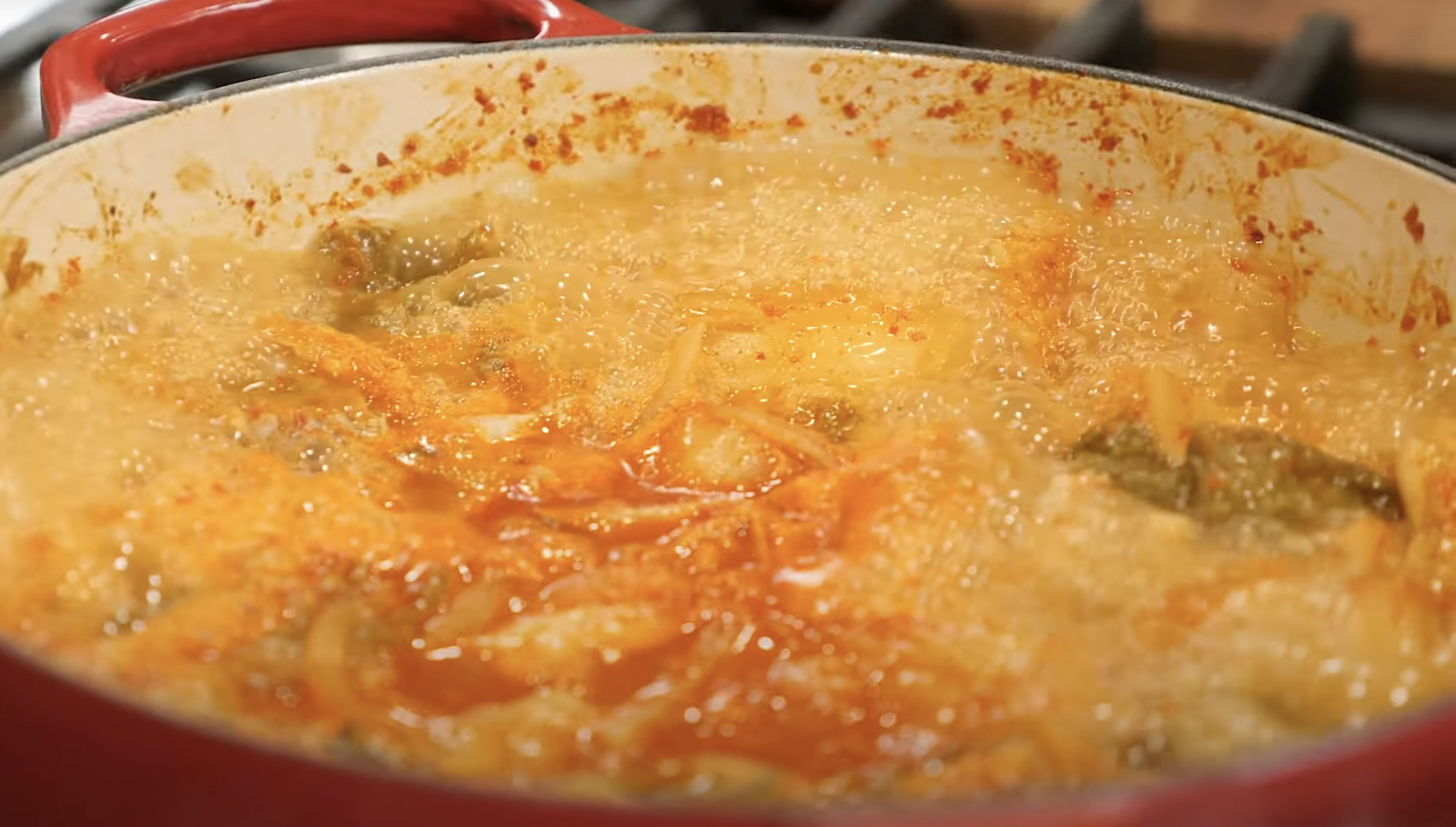
- Use the water used to rinse rice (ssalddeumul, 쌀뜨물) as the stew base. It’s commonly used for Korean stews. Use the water from the second or third round of rinsing. The rice water thickens the broth slightly and enhances the flavor.
- Anchovy broth, chicken broth, milky bone broth or vegetable broth will also be great as a soup base.
- Use the juice from the kimchi if available. It will add lots of flavor to the broth.