History
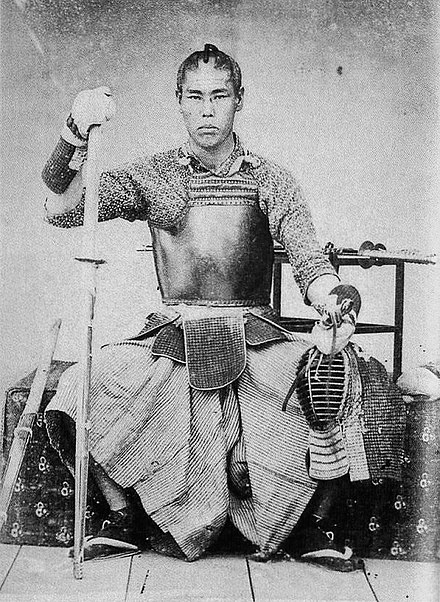 During the Edo period (1603-1868) the use of real swords for training purposes was discouraged due to injuries, with wooden practice swords in the form of bokken/bokuto and shinai were often used instead. To further reduce injuries, practice armour based on traditional samurai armor was developed, with this practice armour being the basis for the modern bōgu.
Kendo (剣道, Kendō, lit. 'sword way', 'sword path' or 'way of the sword') is a modern Japanese martial art, descended from kenjutsu (one of the old Japanese martial arts, swordsmanship), that uses bamboo swords (shinai) as well as protective armor (bōgu). Today, it is widely practiced within Japan and has spread to many other nations across the world.
Swordsmen in Japan established schools of kenjutsu (the ancestor of kendo). These continued for centuries and form the basis of kendo practice today. Formal kendo exercises known as kata were developed several centuries ago as kenjutsu practice for warriors. They are still studied today, in a modified form.
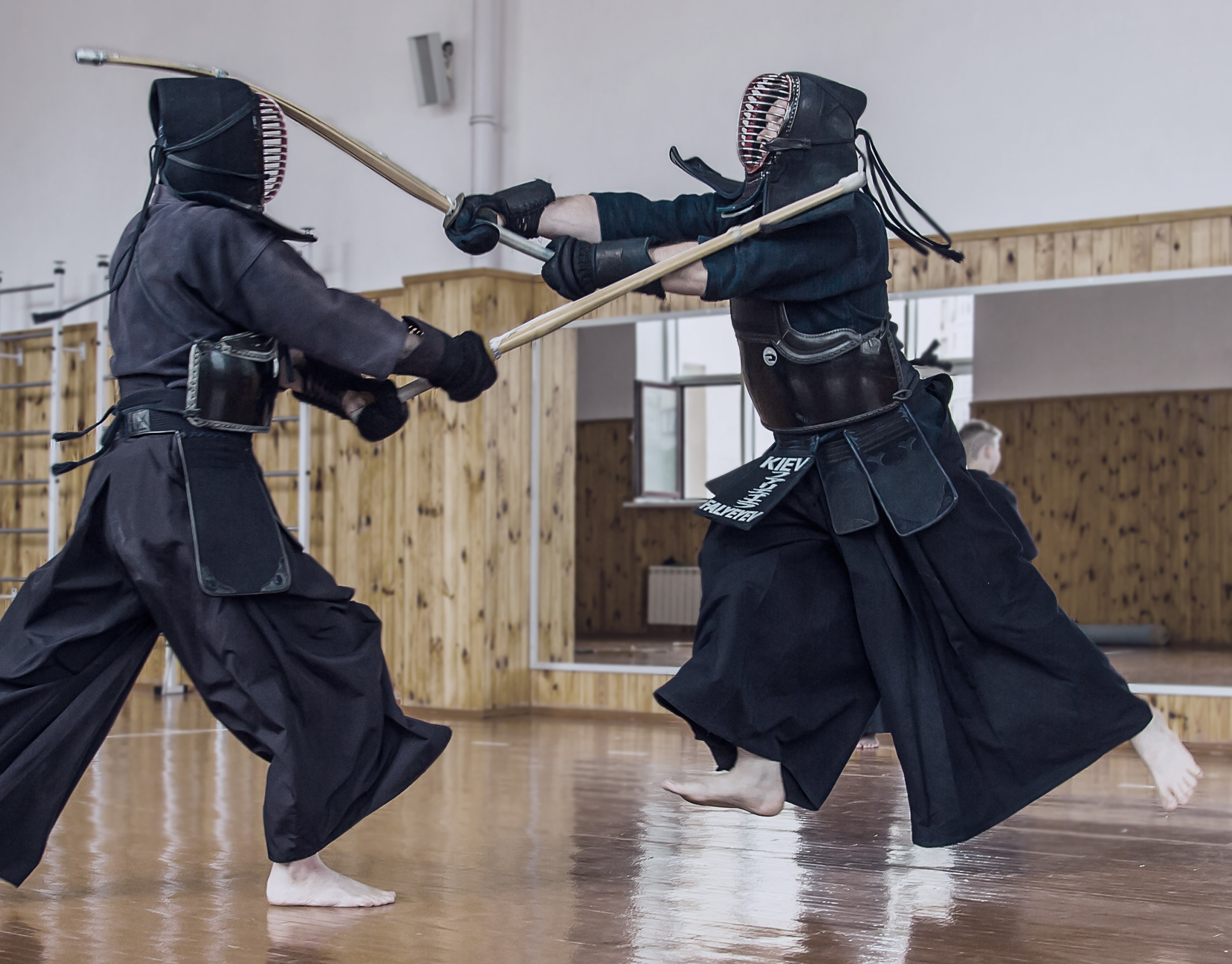 The introduction of bamboo practice swords and armor to sword training is attributed to Naganuma Shirōzaemon Kunisato (長沼 四郎左衛門 国郷, 1688–1767) during the Shotoku Era (1711–1715). Naganuma developed the use of this armor and established a training method using bamboo swords.
Yamada Heizaemon Mitsunori (Ippūsai) (山田平左衛門光徳(一風斎), 1638–1718), third son of Naganuma and the 8th headmaster of the Kashima Shinden Jikishinkage-ryū Kenjutsu, is credited with improving the art with Japanese wooden and bamboo swords, according to his gravestone's inscription. He is also credited with refining the armor by adding a metal grille to the headpiece (面; men) and thick cotton protective coverings to the gauntlets (小手; kote). Naganuma Sirozaemon Kunisato (長沼四郎左衛門国郷, 1688-1767) inherited the tradition from his father Heizaemon in 1708, and the two of them collaborated to improve what would become modern kendo training armor.